Does your afternoon ponytail routinely result in a throbbing tension headache? According to professional stylists, this physical discomfort isn't a flaw, but rather a symptom of un-tailored weight pulling on your scalp. Managing heavy hair volume often feels like a daily wrestling match with your blow-dryer, leaving your arms exhausted while your roots remain frustratingly damp.
Rather than simply chopping off length to find relief, the secret lies in understanding the crucial difference between hair volume (how much space your style takes up) and hair weight (the physical heaviness of your strands). Think of your locks using the fabric analogy: tailoring dense hair is like working with a heavy wool blanket instead of a light silk sheet. Standard haircuts treat all textures identically, which is exactly why a basic trim rarely stops a substantial mane from expanding into a giant triangle the moment it encounters humidity.
True transformation happens when you stop focusing on the bottom edge of your haircut and start addressing the internal architecture. By removing strategic bulk from the inside—a process professionals call de-bulking—you eliminate hair density problems without sacrificing your silhouette. Discovering the best haircuts for thick hair means customizing that heavy interior fabric, allowing your style to finally flow gracefully.
If your morning routine feels like wrestling a heavy blanket, start thinking about your hair as a material requiring custom tailoring. Fine hair behaves like lightweight silk, naturally draping without much help, but coarse hair acts more like thick upholstery fabric. You cannot simply chop the hem of a heavy wool coat and expect it to swing beautifully. To communicate this to a salon professional, use the 1:1 Rule: pairing one professional term with a simple, visual explanation. For example, requesting debulking techniques (strategically removing weight from the densest spots) tells them you want that heavy fabric tailored to move smoothly rather than just chopped shorter.
Real structural improvement occurs beneath the surface through internal architecture, which works exactly like removing the bulky winter lining from a jacket so the outer shell naturally lays flat against your body. Instead of just cutting obvious visible layers on top, stylists rely on internal thinning methods—snipping into the hidden, underneath sections to carve out necessary empty space. Once your hair has room to breathe on the inside, the outside stops expanding outward. Mastering this invisible, structural tailoring directly prevents the geometric, bottom-heavy expansion known as the 'Christmas Tree' effect.
Have you ever left a salon realizing your silhouette looks exactly like a geometric shape? For those with dense hair, a simple blunt cut often triggers the "Christmas Tree" effect—flat at the roots, flaring aggressively at the bottom. This happens because strands fall to the exact same length, stacking perfectly to create a solid wall. The heavy weight pushes outward, creating that stubborn triangle shape hair.
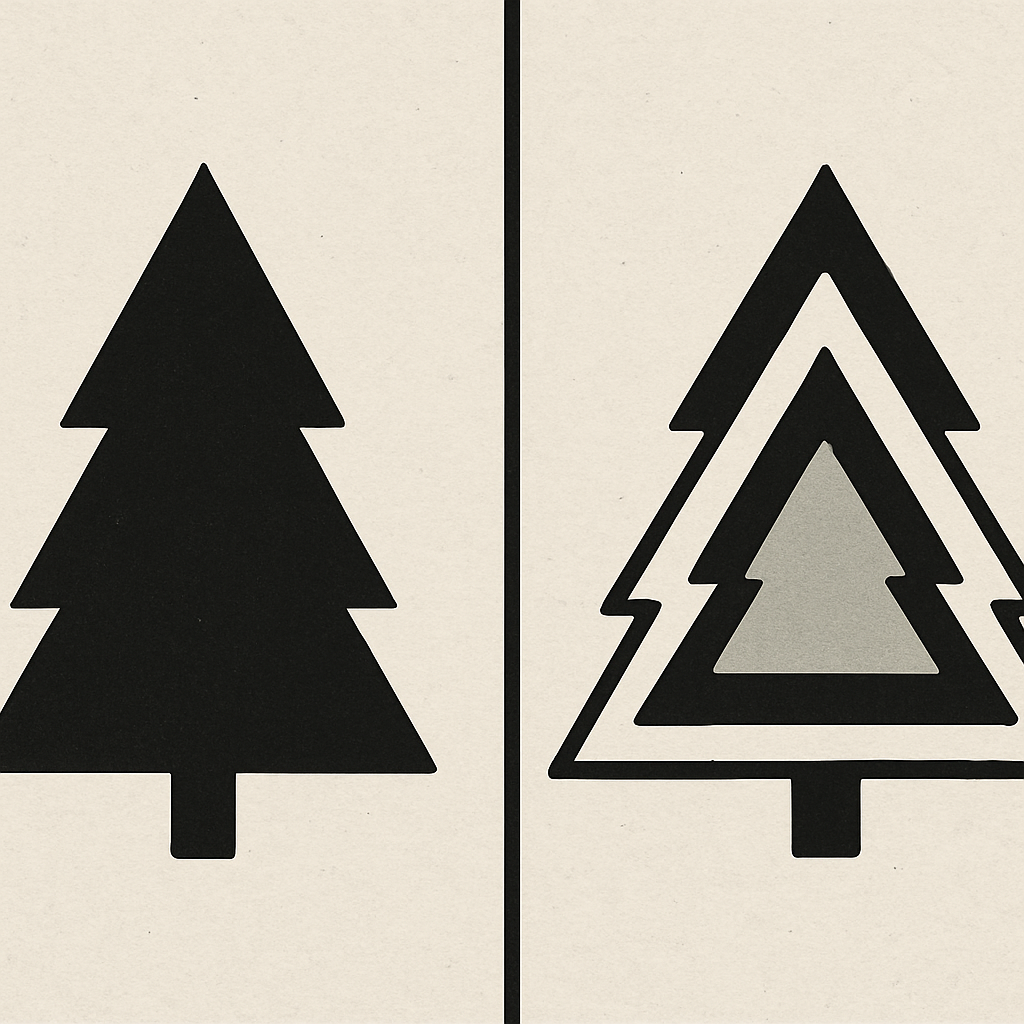
Fixing this geometry requires more than standard layers, which often leave a harsh "shelf" of short hair sitting rigidly over a long curtain. The true secret is internal layering techniques—cutting shorter pieces underneath the canopy to carve out empty breathing room. This creates a blended, smooth "slope" rather than a disconnected shelf, allowing your outer strands to collapse inward. This strategic weight removal changes the architecture of your cut without sacrificing visible length.
Targeting dense sections through mid-length debulking ensures your strands finally rest beautifully against your head rather than puffing outward. This hidden tailoring helps permanently reduce hair bulk, restoring natural swing and drastically cutting your morning drying time. Once you know how to manage density internally, you can confidently wear short looks you previously thought impossible.
Chopping off your length feels terrifying when you have substantial volume, usually sparking fears of waking up with a mushroom-shaped helmet. However, well-executed pixie styles for dense hair actually use your natural weight as an advantage. By leaving the top layers slightly longer, your stylist can carve out a "piecey" texture, allowing your thick strands to lay beautifully flat instead of aggressively fighting for space.
The true secret to these short styles for coarse hair lies hidden underneath the canopy. A tapered nape—cutting the hair very close to the skin so it tightly hugs the neck—is absolutely essential to stop the bottom bulk from pushing everything outward. Taking this a step further, utilizing a strategic undercut for managing heavy hair acts as an invisible foundation that reduces physical mass, allowing the upper canopy to drape smoothly.
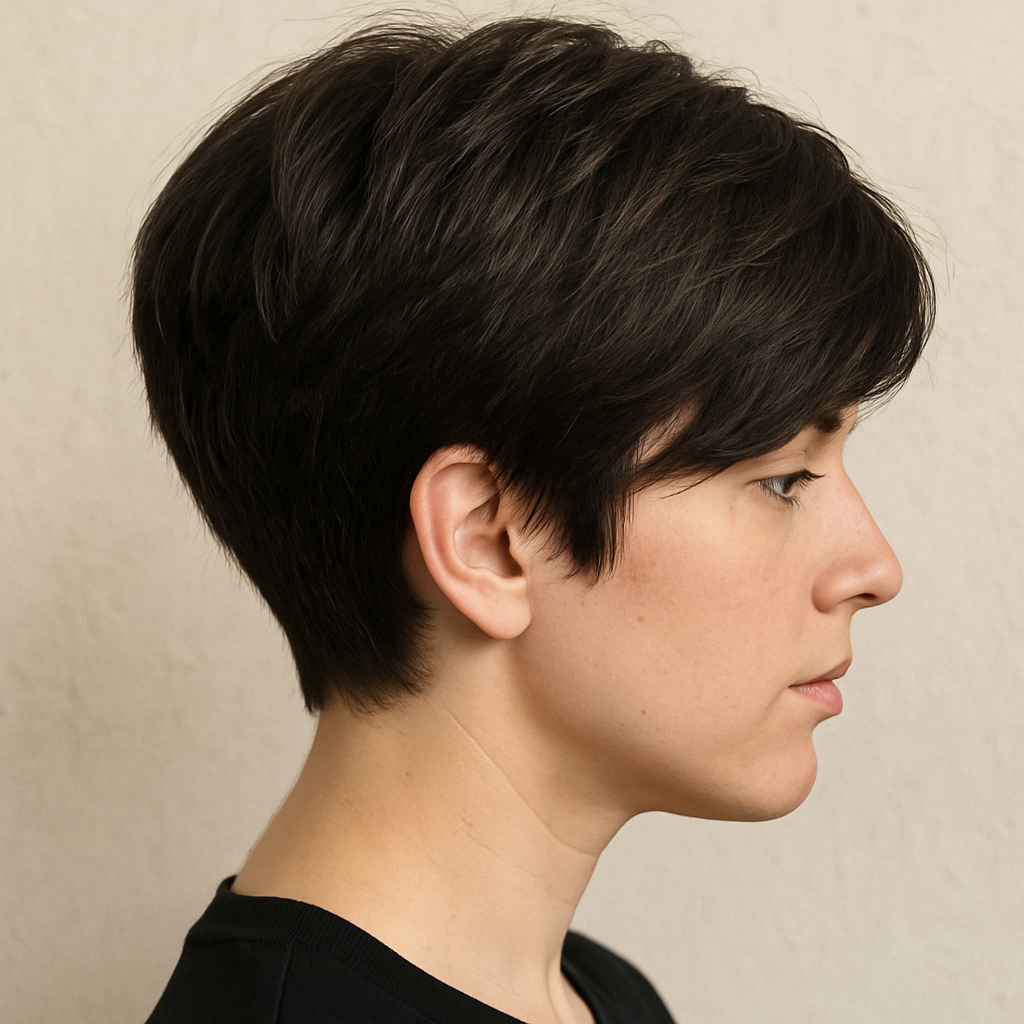
Embracing this hidden internal architecture transforms your daily routine by delivering three major benefits of an undercut for thick hair:
Instant weight reduction
Coolness in summer
Easier styling
Removing underneath bulk completely slims a short silhouette, making medium-length styles equally achievable.
Stepping out with a crisp bob feels incredibly chic—until you wash it yourself and discover your hair expanding sideways. This happens because a straight chop creates a heavy shelf at the bottom. Stylists call this the "Broom Effect," where dense strands are cut at the exact same length, forcing the blunt ends to aggressively fan outward as they fight for physical space.
To fix this geometric issue, you need to shift your salon request from a harsh line to a gentle slope. When analyzing a tapered bob vs blunt cut, the clear winner for high density hair utilizes a structural technique called graduation. This simply means the hair is snipped progressively shorter toward the nape of the neck, building an invisible, curved foundation that naturally encourages the top layers to tuck beautifully inward rather than expanding out.
Maintenance is the only catch to preventing this tailored silhouette from reverting into a wide puff ball, as the architectural slope grows out quickly. Regardless, this shape ranks among the best haircuts for thick hair because it predictably manages bulk while maintaining a polished perimeter.
Embracing your natural volume doesn't have to mean wearing a heavy, static blanket of hair. Modern shag styles for thick wavy hair thrive on strategic chaos, turning overwhelming bulk into a deliberate, breezy style. The secret weapon here is point cutting—a technique where your stylist snips vertically into the ends of your hair to break up the blunt line. Instead of sharp, shelf-like edges, this creates soft, feathered tips that seamlessly blend into one another. Because this internal architecture removes weight from the bottom, you finally achieve genuine movement in thick hair rather than fighting a stiff, immovable mass.

Communicating this vision at the salon is easy when you ask for the core elements of a thick-hair shag:
Crown layers for lift
Face framing
Point-cut ends
This multi-layered approach is the ultimate wash-and-go solution, allowing dense strands to air-dry beautifully without puffing up in humidity. However, if you crave that same effortless manageability but prefer a glamorous, ultra-long aesthetic over a textured vibe, a tiered, long-layered approach provides the perfect solution.
Thick hair punishes wrong bulk removal. HairPick models density and face shape together, suggesting ten cuts that relieve weight without the Christmas-tree effect—each with photoreal output and technical notes for your stylist.
Exhausted by the physical weight of your hair but entirely attached to your length? The butterfly cut for maximum hair density acts as an elegant optical illusion. Instead of a heavy curtain pulling at your scalp, this technique provides dramatic long hair weight removal without sacrificing your bottom hemline. By strategically tailoring the interior, stylists can reduce overall hair mass by up to 40%, leaving a style that looks full but feels delightfully airy.
The magic behind this lightness relies on the "Two-Tier" secret. The top section is tailored like a voluminous bob cascading around your cheekbones, while the bottom flows down your back. These sweeping face-framing layers act like tied-back drapes, opening up your features rather than hiding them behind dense fabric. This tiered layering seamlessly blends both sections, completely eliminating the dreaded flat-top, wide-bottom "Christmas tree" shape that thick hair so easily falls into.
Experiencing this weightless silhouette means finally wearing high ponytails without midday tension headaches. Your heavy strands gain the freedom to move gracefully, delivering that bouncy blowout look with half the daily effort. When opting for a collarbone-grazing length, specific styling techniques prevent the hair from taking on a rigid, helmet-like appearance.
Chopping into a long bob feels liberating until humidity hits and your hair begins to swell. To style a thick lob properly, you must ditch the bulky hemline. A blunt cut pools all your density at the shoulders. For true movement in thick hair, request a textured lob. Here, the stylist snips directly into those heavy ends, creating internal space so the shape tapers gracefully inward rather than puffing out.
Daily taming relies on "directional drying"—a practical technique that intentionally forces your roots to lay flat. Flipping your head upside down to blow-dry creates massive, unwanted scalp lift. Instead, aim the nozzle's airflow strictly downward from your natural part. Wrapping strands tightly against your scalp with a brush naturally smooths the cuticle to dramatically reduce hair volume styling time.
Sealing this sleek silhouette requires a final step called "compression styling," which involves pressing a flat iron firmly over the mid-lengths and ends. This physically compresses the dense fabric of your strands, entirely eliminating that dreaded helmet effect. While tailored lobs rescue women battling density, heavy hair remains a universal challenge that requires equally strategic approaches for shorter, masculine styles.
Managing heavy density often feels like wrestling porcupine quills—once it grows a half-inch, straight strands stubbornly poke straight out. The secret to effective coarse hair management lies in controlling the perimeter. Your neckline acts as the haircut's foundation. Keeping these lower edges cropped tight to the skin creates a clean, tailored silhouette, making any remaining bulk on top look entirely intentional rather than unkempt.
Knowing what to request removes the guesswork from finding low maintenance short styles. Here are the top three cuts for thick-haired guys:
The Taper Fade: Blends hair down to the skin at the neck and temples, entirely eliminating unwanted side-bulk.
The Textured Quiff: Leaves length upfront but snips deeply into the ends, making the top pliable rather than rigid.
The Modern Side Part: Uses a cleanly defined part to naturally divide and organize heavy weight.
Always ask your barber to add "texture on top" because it is a vital strategy for haircuts for straight thick hair guys. Rather than leaving a solid roof of heavy hair, carving out internal space allows coarse strands to interlock and lay flat using minimal styling product. Once you master controlling weight in shorter crops, similar principles of weight distribution apply when experimenting with more length.
If your morning routine feels like battling a heavy blanket of waves, leaning into your hair's natural rebellion might be the ultimate solution. Enter the wolf cut for naturally voluminous hair. This hybrid combines the choppy lift of a shag with the sleekness of a mullet. Instead of fighting your hair's tendency to expand, this style concentrates that natural "puff" upward around the crown to create a highly intentional, high-fashion shape.
Transforming wavy thick hair into this effortless style requires strategic weight removal, professionally known as internal debulking. By extracting hidden density underneath, the outer silhouette remains perfectly intact while the overall style gains effortless fluidity. By carving out hidden density, your stylist allows the surface layers to air-dry beautifully. This architectural trick cuts your morning styling time to under 10 minutes, letting you simply scrunch in some cream and go.
Communicating this vision requires knowing exactly how that weight should be extracted to prevent a frizzy nightmare. The specific tools your stylist chooses dictate how those new layers behave over time. To ensure your ends stay crisp rather than frayed, you must understand the critical difference between texturizing shears vs. thinning scissors and communicate your exact needs regarding styling tools.
Sitting in the salon chair while a stylist wields jagged-toothed scissors often triggers panic. Yet, understanding the difference between texturizing shears vs thinning scissors is your ultimate defense. Thinning scissors use closely spaced teeth to simply erase density, which easily causes frayed ends if overused. Texturizing shears feature wider teeth, acting like careful tailoring for thick hair. They carve out intentional movement rather than indiscriminately chopping weight.
To guarantee your stylist is properly debulking hair, you must establish a few boundaries before the first snip. Keep these three golden rules in mind when discussing how to reduce hair bulk:
Never thin from the root: Cutting near the scalp creates short, stubborn hairs that push longer layers outward, causing dreaded "halo frizz."
Texturize on dry hair: Wet strands hide their true shape. Snipping dry ensures the stylist sees exactly how your heavy fabric naturally falls.
Avoid razors on coarse hair: Razors shred wiry cuticles, creating split ends instead of a smooth drape.
Mastering this conversation transforms you into an informed collaborator. Protecting that smooth exterior is easy when you know exactly what tools belong in your hair. With these safeguards firmly set, specific interior techniques can effectively preserve your beloved length.
Long, dense hair often suffers from the "heavy curtain" effect, where the bottom third merges into one solid block. This clumping happens when excessive weight drags down the ends, killing any natural swing. To fix this without sacrificing length or adding visible layers, ask your stylist about internal thinning methods for long hair. Specifically, request the slicing technique. Slicing, or sliding, involves gliding slightly open shears down the inside sections of the strands. This technique hollows out the densest zones without compromising the perimeter, instantly adding movement to previously static strands.
Targeting the hidden interior removes excess bulk precisely where your hair needs it most. Managing hair density this way guarantees your sleek silhouette stays smooth on the outside while feeling incredibly airy underneath. You earn a dramatic reduction in styling time and a cut that actually sways when you walk, rather than sitting on your shoulders like a heavy blanket. Freed from that trapped weight, those newly mobilized strands simply require targeted protection from environmental moisture to maintain their sleekness.
Stepping outside on a humid day often feels like hitting an inflate button on your head. For dense textures, "frizz" is actually volume expansion; strands swell with moisture, pushing apart to create a bell-like silhouette. When a stylist removes weight internally, those freed ends become slightly more exposed. To prevent this tailored silhouette from puffing up, your post-cut hair care routine must prioritize cuticle sealing—smoothing the microscopic outer shingles so ambient moisture cannot penetrate.
The secret to locking down this slim profile against thick hair humidity lies in mastering the "Cold Shot" blow-drying technique. Heat molds the shape, but leaving strands warm keeps the cuticle open and vulnerable. Think of hair like melted wax: it only sets when it cools. Blasting your finished style with cold air for sixty seconds rapidly seals those exterior shingles, locking out dampness.
When managing frizz in coarse hair, combining sealed cuticles with proper internal architecture is non-negotiable. Doing so lets you finally retire the daily flat iron and trust your shape to hold. To guarantee your stylist builds this balanced foundation at your next appointment, translate these structural needs clearly using a concise consultation strategy.
Managing heavy density shifts from a daily struggle to a straightforward routine when you prioritize internal architecture. Recognizing the difference between un-tailored bulk and strategic weight removal equips you to make better decisions at the salon. The golden rules of managing density are simple: shape dictates your silhouette, interior debulking creates movement, and tailored ends prevent geometrical expansion.
To put this knowledge into practice, use this framework to communicate effectively at your next salon visit:
State the problem: "The weight of my hair causes tension and takes too long to dry, so I need to safely reduce volume."
Mention the technique: "I want to utilize internal layering and graduation to create a better drape without losing my perimeter length."
Set the limit: "Please avoid thinning near my roots to prevent flyaway regrowth."
Communicate your styling needs clearly to ensure your haircuts utilize the right structural foundation. Plentiful hair becomes an asset when it is properly tailored to your face shape and lifestyle. With a balanced, internally layered cut, thick hair naturally falls into place, offering effortless movement and significantly reduced daily maintenance.